Writing is an exquisite form of torture

I knew I had nailed the interview and it was shortly coming to a close. The interviewers had been gregarious and made the sterile, gray conference room as inviting as a living room. I researched the company well and had practiced my responses on the hour-and-ten-minute drive down. While I was nailing it, I was getting hungry. I couldn’t wait for my post-interview treat.

Then the interviewer asked me: “Why do you enjoy writing so much? Especially when it can be agonizing sometimes.”

I froze. I’d been writing professionally for nearly a decade at that point, and no one had ever asked me point blank before why I enjoyed writing.
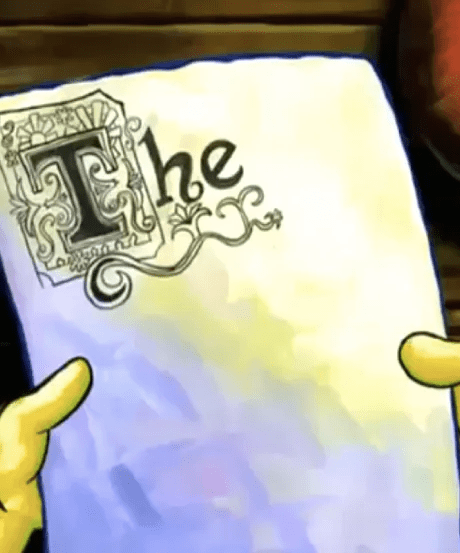
And it is agonizing, when the words won’t come. There is nothing more frustrating than watching a cursor flash brightly on an empty page.

Tearing your hair out while on a deadline because your brain won’t produce a single coherent thought. Frantically searching synonyms for ‘skills.’ Wondering if you accidentally used the wrong ‘there’ and missed it while proofreading. Racking your brain for a new and sexy way to sell microwave oven parts.

Once, while working with an account executive, she told me she could “never do what you do” when I was complaining about trying to write ad copy. Which was so strange to me, since I had used that exact same phrase to my friend a few nights earlier when she had been describing a night shift at the hospital, where she worked as a pediatric ICU nurse. Even when spiraling in a bad case of writer’s block, I would much rather be staring at an empty page than earning hundreds of thousands of dollars in the medical field. A bad day as a writer is better than the best day in any other field.

I finally ended up telling the interviewer, “Writing is truly an exquisite form of torture, and there is nothing else I’d rather do.”

How caregiving has enhanced my career

Amid the AI slop and self-righteousness of LinkedIn, one post stopped me in my tracks.

It celebrated a speaker and VP who championed putting motherhood on your resume. I’m not a mother, but I know damn well that there are many, many skills required in parenting. I also am acutely aware of how motherhood can be a ‘dark mark’ on your professional resume; how American society simultaneously expects women to give their all to their career while parenting as a full-time job (and then some!). I’ve heard some older folks ask women my age when they were going to “get serious” about their families and step away from the careers they’ve sacrificed so much for—while knowing full well their companies would completely fall apart without them. (Not to mention what a blow the family finances would take as one stream of income is lost.) 

Like I said, I’m not a mother. But I have done a lot of caregiving in the last few years. 

One grandparent has moved in with my parents. All three surviving grandparents require lots of help. My immediate family has endured multiple life-changing, difficult medical diagnoses that required procedures and recovery time. I also helped care for my newborn niece. All of these domestic duties, while demanding a huge amount of time and effort, have riddled me with two kinds of guilt. One: feeling guilty for not investing more into my career after spending hours assisting with caregiving and needing me time. Two: feeling guilty for feeling guilty about the time I spent caregiving and not doing other things; that I should relish this fleeting time I have with those receiving care. 

That VP/speaker on LinkedIn has completely flipped my guilty mindset on its head. And for that, I am grateful to reflect on the skills caregiving has given me, that I no doubt use in my career every single day without realizing. 

  • Patience and perseverance: I’ve definitely gone through days (and weeks) where it just seems like nothing is going right. A good cry, vent session, or wallowing period is all well and good to feel things. But I’ve also noticed my inner monologue telling me that when the undertow seems to be dragging everything down, it has to get better. It just has to. Right? Put your head down and keep going. It won’t feel as overwhelming. Things will smooth out. And you know what? That inner monologue is always right, whether enduring a caregiving setback or disappointment at work. 
  • Planning: my family makes fun of me for having a paper planner when the whole world seems to operate on Google Calendar. But you know what? Writing down all of my plans helps my brain stay tidy. (Plus, there have been studies suggesting physically writing down information helps you remember it better, but I won’t get on my high horse for that.) A plan for the day, week, or month helps me juggle everything between career goals and obligations and family assistance, while ensuring I have time to do the things I enjoy and avoiding pouring from an empty cup.
  • Flexibility: of course, the saying about our best laid plans is true. Going with the flow—and adjusting plans when the flow is about to take them out—is a skill in and of itself. And having flexibility when dealing with other humans. You never know who just got the worst news of their life and is struggling to make it through the day.
  • Multitasking: have you ever had to lock in on thoroughly proofreading 50+ testimonials for a client while a seven-week-old sleep diva is napping on your chest and will wake up screaming if you so much as twitch a muscle? I sure have! I’ve become quite good at stacking tasks when needed. Like listening to a webinar while walking, or going through emails while waiting at the doctor’s office.
  • Communication: there can absolutely be no room for interpretation in certain caregiving situations. Clear, concise communication has been a forte of mine and continues to sharpen.
  • Empathy: watching my grandparents age so closely has truly opened my eyes. Not just because it’s a taste of what I can expect in 40, 50, 60 years from now, but newfound understanding of what so many people in the world go through. Endless tests and doctor appointments when no one really knows what’s going on or how to fix it. Constant pain. Eyesight, hearing disappearing. Balance gone. Pills upon pills upon pills that all require to be taken with food, without food, no closer than 2 hours apart but, goodness gracious, don’t go over 3, and all somehow interact with each other so it takes four pharmacists and gerontologist to ensure a catastrophe is avoided. Aging is a full-time job. And when cognitive function is slipping, you need all the help you can get from the right people—and how easy it is for the wrong person to come in and ruin it.

There are so many hard skills needed in the workforce. But some of the best people I’ve worked with have embodied qualities that translate into caregiving. In fact, many of my female colleagues have shared with me that they are caregivers for parents, children, nieces, nephews. And it’s made them stronger and better workers.

A love letter to the inverted pyramid

The inverted pyramid completely changed my writing–in journalism, PR, marketing, and for fun. 

When I was going through elementary to high school, I was routinely the best writer in the class. And I felt like in order to be the best writer, I had to be superfluously descriptive, dive deep into the details. Looking back, I was also unintentionally burying the lede in order to make an impression. 

Then Journalism 102 whacked me across the face with an AP Stylebook. “No.”

I remember learning about the inverted pyramid and thinking, “Oh. This is why I’m doing what I’m doing. Say what you’re talking about and why it matters.”

That’s the writing philosophy that has guided me from reporting to marketing to SEO to advertising. 

Here’s what I’m saying, and here’s why it matters. 

What has influenced my writing

I took AP English and Literature in high school with Mr Daly. One of the books we had to read was Portrait of the Artist as a Young Man, and everyone in class hated it. “It’s so confusing! There’s too much in here!” I hated it too, but it also helped me understand stream of consciousness style and how to write how you think.  

Two authors Mr. Daly also assigned to the class have stuck out to me: F. Scott Fitzgerald and Ernest Hemingway. I read The Great Gatsby my junior year of high school and it has remained one of my favorite books. I remember so vividly picturing those wild party scenes in my head on a vast green lawn, with summer twilight twinkling in the background, almost smelling the sweet summer nighttime air. 

We also read Hemingway’s Hills Like White Elephants in class. But I sought out For Whom The Bell Tolls on my own and was shocked at the story. And the clarity of it. 

On the opposite end of the spectrum, I also read The Scarlet Letter for that same class and was almost repulsed by the loquacious Nathaniel Hawthorne. The story felt muddled between all his fluff. (And it was summertime homework, so it just felt extra cruel.)  

My sister read The Fault in Our Stars by John Green as a high schooler. One day, she burst into my room, sobbing about one of the final chapters of the book. I recall sitting at my desk, watching her sob, and going “ooookkaaaayyyy…” A few months later, I was convinced to read the book myself and burst into her room sobbing just as hard. I marveled at how a story can grip you and wrench you to pieces. 

When I first started journalism classes, my professor Holly told me that I didn’t have to “have a button” at the end of my articles. I was blown away! I felt like everything had to be wrapped up nicely with a bow. But journalism is not like that. 

And all my journalism classes taught me to pare my writing down. Inadvertently, as I was trimming my ledes and inverted pyramids, the practice carried over to my creative writing. I always felt ridiculous adding more ‘flowery prose’ in my playwriting classes (even though it was necessary). 

While I was in middle and early high school, I read what I now understand is called “chick lit.” But for me, it was a way to see what was ahead for me in high school and adulthood with a glamorous, fantastica twist. Meg Cabot and Sophie Kinsella were the two main authors for me–I explored the world of high school and princess etiquette with The Princess Diaries series and bumbled around London with Becky Bloomwood in the Shopaholic books. Then, I strayed away. I guess my journalistic ambitions and education caught up with me, as I was devouring more cut-and-dry biographies and historical nonfiction rather than romcoms for years. (I still do love a good biography and nonfiction book–tales about old Hollywood stars or theatre legends and British royal history tomes are my favorites.) 

But then, like everyone else on TikTok in 2023, I picked up Happy Place by Emily Henry at my local library. And I remembered that romcom books can be FUN! With substance! And that it’s ok to escape into a love story while balancing it with some real-life problems focusing on grief and loss. So that began my recent rediscovery and proud reclaiming of “chick lit,” which I am enjoying with gusto. And rereading The Princess Diaries and Shopaholic series with newfound appreciation, more relatable life experience of my own, and unabashed joy. 

Because that’s what reading books and telling stories should be about, right?

Why working remotely is a great skill

I’ve held a number of positions in small start up companies where office space was limited — or nonexistent. And along while I adjusted to the new, professional world, it brought along another challenge: I would have to work remotely.

Working in a remote position is on the rise. According to a 2017 New York Times article, about 31% of Americans spend 80 to 100% working in an un-traditional office setting. And with the explosion of social media and the internet, I’m sure that trend is here to stay.

When I first started, I reveled in the freedom like an unsupervised child in a candy store. I binged on Netflix while plugging away at my laptop. I snuggled with my pups while writing up social media strategy. Stayed in pajamas all day? Did that.

Soon, it caught up with me. I needed to learn how to buckle down and really become a productive worker. Along the way, I’ve learned some great things about myself and skills that translate not only to working at home, but in the office as well.

  • Discipline. A great skill that working from home taught me was discipline. To force myself to stay on one task and not get distracted by the siren song of Netflix or the warm cocoon of my bed mere feet away. What works for me is setting a time limit. “Okay, I’m going to work for the next hour, THEN take a break and watch the next episode of the Crown.” Showing you can work hard and get things done without losing focus is valued wherever you go.
  • Flexibility.  The opposite of rigidness is going with the flow. Working in social media means basically checking all of your business accounts at all hours of the day to make sure everything is posted and there’s no inappropriate comments. And, if you’re like me and get creative surges at night, you can work whenever you feel most awake and productive. That can mean weekends, too! Showing your versatility in the workplace is great!
  • Communication. Since you can’t just stroll over to your boss’s desk to chat, learning how to effectively communicate is essential to working remotely and translates everywhere.
  • Learning your own work style. I always thought I needed complete silence to get work done. Turns out, sitting in a completely silent house for seven hours a day can get old quickly (and kind of spooky). I figured out I need some sort of background noise, mimicking the sounds of an office. Popping on travel shows at a lower volume does the trick for me! By being forced to confront your own work habits without any distractions, you can figure out what makes you a more productive worker and apply those habits in future jobs.
  • Computer wizardry. Usually, working remotely means using a computer to do you job. That means becoming very familiar with email, Microsoft Office, your website, software, etc. Wow your older relatives by successfully uploading a document to Google drive, or simply add “computer skills” to your resume.”
  • Resume booster. Speaking of resumes, adding “able to work remotely” will definitely grab the attention of the recruiter or HR officer. Working remotely is still a fairly new concept, so it’ll show you’re trustworthy, dependable and flexible.